The Best Souvenirs to Buy in Marrakech: A Local Expert's Guide
What to buy in Marrakech and where to find it. Rugs, ceramics, leather, spices, argan oil, lanterns, and more. Insider tips from someone who lives here.
Shopping in Marrakech
Shopping in Marrakech is not like shopping anywhere else. The souks of the Medina form one of the largest traditional markets in Africa, a labyrinth of narrow alleyways lined with hundreds of artisan workshops, merchant stalls, and hidden boutiques. The experience is sensory, overwhelming, and utterly addictive.
But the souks can also be confusing, especially for first-time visitors. Quality varies enormously. Prices are rarely fixed. And knowing the difference between a genuinely handcrafted piece and a factory-made reproduction requires either experience or a trusted guide.
This guide covers the best souvenirs to buy in Marrakech, where to find them, what to look for in terms of quality, and how to navigate the process with confidence. It is based on years of living in the city and countless hours spent in the souks, both for personal purchases and on behalf of our villa guests.
Moroccan Rugs and Carpets
A Moroccan rug is one of the most beautiful and meaningful souvenirs you can bring home from Marrakech. Each rug tells a story through its patterns, colours, and weaving technique, and the tradition stretches back centuries across the Berber regions of Morocco.
Types of Rugs
The most sought-after rugs come from the Berber regions of the High Atlas, Middle Atlas, and the Saharan fringes. Each area produces a distinct style.
Beni Ourain rugs from the Middle Atlas are the most internationally recognised. They are thick, plush, and typically feature geometric black or brown patterns on a cream or white wool background. They work beautifully in contemporary interiors and have been featured in design magazines around the world.
Azilal rugs come from the central High Atlas and are known for their more colourful and abstract designs. They often feature asymmetric patterns in bright pinks, yellows, blues, and greens. Each one is unique and deeply personal to the weaver.
Boucherouite rugs are made from recycled fabrics rather than wool. They are colourful, playful, and increasingly popular with collectors and interior designers. They originated as a practical solution in communities where wool was scarce and have become valued as a form of textile art.
Kilims are flat-woven rugs that are lighter and more affordable than knotted carpets. They are versatile, easy to transport, and come in a wide range of patterns and colours.
Where to Buy
The main carpet souk in the Medina is located near Rahba Kedima (the old spice square). There are dozens of carpet dealers here, ranging from small family operations to large showrooms with hundreds of pieces in stock.
For a more curated experience, several boutiques in the Mouassine and Gueliz neighbourhoods specialise in high-quality vintage and contemporary rugs. These tend to be more expensive but offer a calmer shopping experience with knowledgeable staff.
What to Look For
Feel the weight and density of the rug. A quality handwoven rug should feel substantial. Check the back: hand-knotted rugs have slight irregularities that machine-made copies do not. Ask about the origin, the age, and the materials. A reputable dealer will be happy to explain.
Expect to negotiate. The first price quoted is rarely the final price, and a respectful negotiation is part of the process. If you are uncomfortable negotiating, a private shopping guide can handle this for you.
Ceramics and Pottery
Moroccan ceramics are among the most distinctive in the world. The tradition is centred in Fes and Safi, but Marrakech has an excellent selection of both traditional and contemporary pieces.
What to Look For
Traditional Fassi ceramics are characterised by blue and white geometric patterns, inspired by Islamic art and Andalusian design. They are used for plates, bowls, tagine dishes, and decorative tiles.
Safi pottery tends to be more colourful, with earthy tones of green, yellow, and brown. It has a rustic, organic quality that works well in both traditional and modern settings.
Contemporary Moroccan ceramics have become increasingly popular, with local designers creating pieces that blend traditional techniques with modern aesthetics. Look for hand-painted bowls, serving dishes, and decorative objects in boutiques in Gueliz and the Medina.
Practical Tips
Ceramics are fragile, so consider how you will transport them. Many dealers offer professional packing and shipping services. If you are buying a large piece, this is often the safest option. For smaller items, wrap them carefully in clothing in your suitcase.
Leather Goods
Marrakech has been a centre of leather production for centuries. The city's tanneries, visible from certain rooftop terraces in the Medina, still use traditional methods involving natural dyes and hand processing.
What to Buy
Babouches (traditional Moroccan slippers) are the most popular leather souvenir. They come in every colour imaginable and range from simple everyday styles to elaborately embroidered pieces. Quality babouches use soft goat leather and are stitched by hand.
Leather bags, poufs, belts, and wallets are widely available. The quality ranges from excellent to poor, so it is important to check the stitching, the leather quality, and the finishing. The best leather goods use vegetable-tanned leather, which has a distinctive smell and develops a beautiful patina over time.
Where to Buy
The leather souk in the Medina has the widest selection and the best prices, but the experience can be intense. For a calmer shopping experience, several boutiques in Gueliz and the Kasbah area offer curated selections of leather goods at fixed prices.
Spices
No trip to Marrakech is complete without a visit to a spice merchant. The aromas of cumin, saffron, turmeric, paprika, ras el hanout, and dozens of other spices fill the air of the souks and are one of the defining sensory experiences of the city.
What to Buy
Ras el hanout is the signature Moroccan spice blend, a complex mixture of up to 30 different spices that varies from merchant to merchant. A good ras el hanout is aromatic, warm, and slightly sweet, and it transforms tagines, couscous, and grilled meats.
Saffron is another popular purchase, and Moroccan saffron from the Taliouine region is considered among the finest in the world. Be cautious, however, as fake saffron (often safflower or dyed corn silk) is common in tourist areas. Buy from a reputable merchant and expect to pay a fair price for genuine saffron. If the price seems too good to be true, it probably is.
Other popular spice purchases include cumin, smoked paprika, dried rose petals, orange blossom water, and preserved lemons.
Where to Buy
Rahba Kedima, the old spice square in the Medina, is the traditional centre of the spice trade. Several merchants here have been in business for generations and offer excellent quality. For a more curated experience, specialist spice shops in the Mouassine quarter and Gueliz offer pre-packaged blends and gift sets.
Argan Oil
Argan oil is one of Morocco's most famous exports, used both in cooking and in cosmetics. The oil is produced from the nuts of the argan tree, which grows exclusively in southwestern Morocco.
Culinary vs Cosmetic
There are two types of argan oil, and they are not interchangeable. Culinary argan oil is made from roasted nuts and has a rich, nutty flavour. It is used as a finishing oil for salads, couscous, and amlou (a Moroccan almond and honey spread). Cosmetic argan oil is made from raw nuts and is used for skin, hair, and nails.
Quality and Authenticity
The market is flooded with fake or diluted argan oil, particularly in tourist areas. Genuine argan oil is not cheap. A litre of pure cosmetic argan oil costs significantly more than the small bottles sold for a few dirhams in the souks.
Buy from cooperatives or reputable shops that can verify the source of their oil. The best cooperatives are run by women's associations in the Essaouira and Agadir regions, and some have retail outlets in Marrakech.
Lanterns and Metalwork
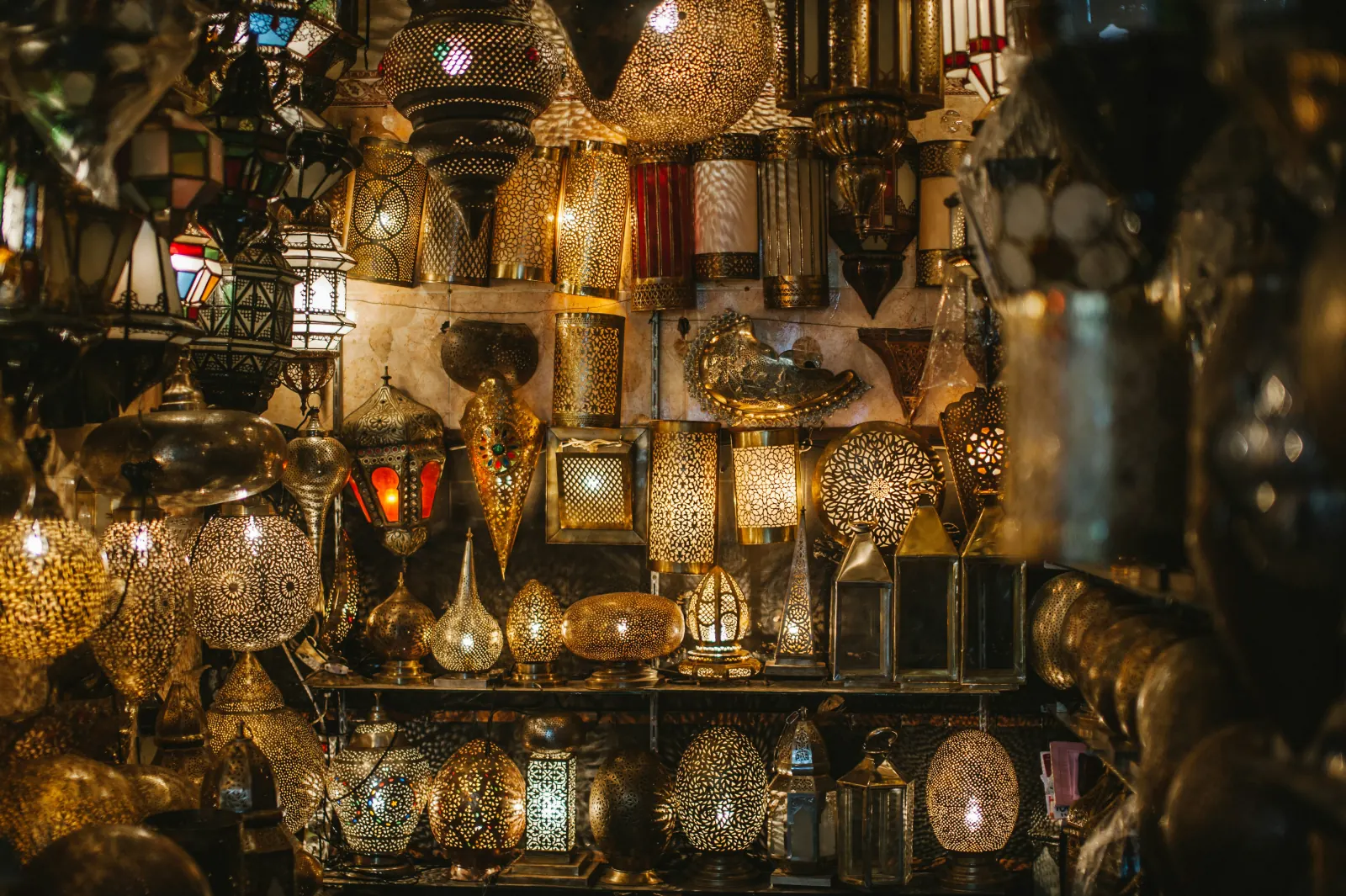
Moroccan lanterns are iconic. The intricate metalwork, often in brass or iron, casts beautiful patterns of light and shadow. They range from small tea light holders to large statement pieces designed for hallways and living rooms.
What to Look For
The best lanterns are handmade by skilled metalworkers using traditional techniques. Look for clean lines, precise piercing, and well-finished edges. The cheapest lanterns are machine-stamped and imported, while the finest are still made by hand in workshops within the Medina.
Brass trays, mirrors, door knockers, and decorative plates are also popular metalwork purchases. Many pieces can be custom-made to your specifications if you have a few days to wait.
Shipping
Large lanterns and metalwork pieces are difficult to transport in luggage. Most dealers offer international shipping, and several specialist shipping companies in Marrakech handle fragile and oversized items. We can recommend reliable shippers if needed.
Textiles and Embroidery
Morocco has a rich textile tradition that extends far beyond carpets. Handwoven blankets, cushion covers, table linens, and embroidered fabrics make beautiful and practical souvenirs.
What to Buy
Handira blankets are traditional Berber wedding blankets, typically made from wool and decorated with sequins. They are used as throws, wall hangings, or bedspreads and have become highly sought after by interior designers.
Sabra (cactus silk) cushion covers are soft, lustrous, and available in a wide range of colours. They are lightweight, easy to pack, and make excellent gifts.
Embroidered napkins, tablecloths, and tea towels from the Fes tradition are delicate, beautiful, and practical. Look for hand-embroidered pieces rather than machine-made reproductions.
Kaftans and Fashion
A Moroccan kaftan is one of the most elegant garments you can bring home. Traditionally worn for special occasions, the kaftan has been adopted by international fashion and works beautifully as evening wear, beach cover-ups, or loungewear.
Ready-Made vs Bespoke
The souks are full of ready-made kaftans in every price range. For something truly special, consider having a kaftan made to measure. Several tailors in the Medina and Gueliz specialise in bespoke kaftans and can create a piece in your choice of fabric, colour, and embroidery within two to three days.
Djellabas (the hooded Moroccan robe) and gandouras (sleeveless tunics) are also popular purchases, particularly in linen or cotton for warm weather wear.
Jewellery
Moroccan jewellery reflects the country's diverse cultural heritage, with Berber, Arab, Jewish, and Tuareg influences all represented in the designs.
What to Look For
Berber silver jewellery is the most distinctive Moroccan tradition. Look for heavy silver bracelets, fibulae (the traditional cloak pins), and necklaces featuring amber, coral, and amazonite beads. Antique pieces are increasingly rare and valuable, so be cautious of reproductions sold as originals.
Contemporary Moroccan jewellery designers have created a thriving scene in Marrakech, with boutiques in Gueliz and the Medina offering modern pieces inspired by traditional motifs. These make excellent gifts and are often more wearable than traditional pieces.
Olive Oil and Food Products
Morocco produces excellent olive oil, and several artisanal producers offer premium extra virgin oils that rival the best from Spain and Italy. Look for cold-pressed, single-estate oils from the Meknes or Marrakech regions.
Other food souvenirs worth considering include preserved lemons, harissa, amlou (argan and almond spread), Moroccan mint tea, and locally produced honey. These are easy to pack and make thoughtful gifts.
Shopping Tips from a Local
Negotiate with Respect
Negotiation is expected in the souks, and it is part of the culture. Start by asking the price, then offer around 40 to 50 percent of the quoted figure. The final price will usually land somewhere in between. Stay friendly, be patient, and do not be afraid to walk away. If the merchant calls you back, there is still room to negotiate.
Bring Cash
Most souk merchants deal in cash (Moroccan dirhams). While some larger shops accept cards, you will get better prices and more flexibility with cash. ATMs are widely available throughout the city.
Take Your Time
The best finds in Marrakech come to those who explore. Do not feel pressured to buy at the first shop you enter. Walk through the souks, compare quality and prices, and return to the pieces that stayed in your mind.
Consider a Shopping Guide
A private shopping guide is one of the best investments you can make in Marrakech. Our guides know the artisans personally, understand quality, and can negotiate on your behalf in Darija (Moroccan Arabic). They will take you to workshops and showrooms that you would never find on your own, and help you avoid the tourist traps.
Let Us Help
At The Marrakech Curator, we arrange private shopping experiences for our villa guests. Whether you are looking for a specific rug, a bespoke kaftan, or simply want to explore the souks with someone who knows them inside out, we can set it up.
Tell us what you are looking for, and we will connect you with the right artisans and merchants.